


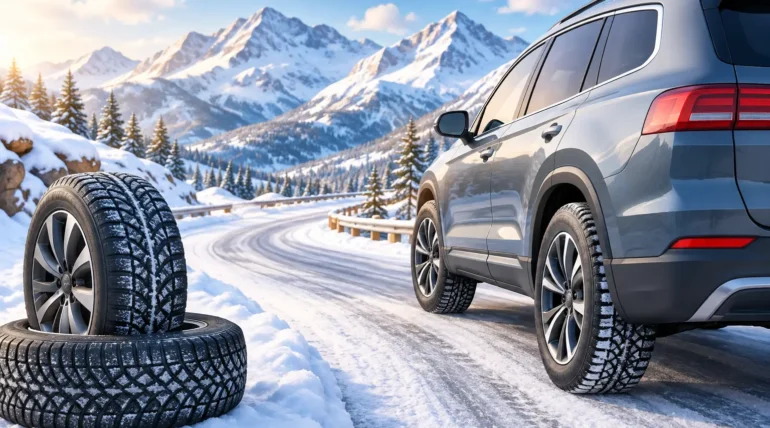
A clear winter morning in Salt Lake City can become a snow-packed canyon drive before lunch. For travelers headed from SLC Airport to Park City, Deer Valley, Alta, Snowbird, Brighton, or Solitude, winter tires are not a minor vehicle feature. They are a primary part of how a vehicle brakes, turns, and maintains composure when pavement temperatures drop and conditions change by the mile.
Luxury travel in the Wasatch is often described in terms of comfort: a clean vehicle, ample room for luggage and ski equipment, a professional chauffeur, and an on-time arrival. Those details matter. Yet in winter, the practical standard behind that experience is weather readiness. The tires beneath the vehicle determine how well its all-wheel-drive system, braking technology, and careful driving can perform.
Why winter tires change cold-weather driving
Winter tires are built with a rubber compound that remains more flexible in low temperatures than the compound used in many all-season tires. That flexibility helps the tire conform to uneven pavement, packed snow, and icy surfaces. Their tread patterns also use deeper channels and thousands of small cuts, called sipes, to move snow and slush away from the contact patch and create additional gripping edges.
The difference is most noticeable during braking and cornering. A vehicle may accelerate reasonably well with all-wheel drive on worn snow, then struggle to stop or hold its line through a downhill curve if its tires cannot find traction. All-wheel drive helps distribute power to the wheels. It does not create the same cold-weather grip that a properly rated winter tire provides.
This distinction matters on mountain routes where elevation rises quickly. Roads can be dry near the airport, wet in the foothills, and snow-covered approaching a resort. Shaded corners, bridge decks, canyon wind, and overnight refreezing can create conditions that do not look severe from inside the vehicle until braking or steering is required.
Winter tires versus all-season tires
All-season tires are designed as a compromise. They can provide capable performance through a broad range of everyday conditions, especially for drivers in moderate climates who see limited snow and consistently maintain their tires. For local driving on plowed city streets, a quality all-season tire may be appropriate depending on the vehicle, route, weather forecast, and driver experience.
Mountain travel asks more of a tire. During Utah’s ski season, a dedicated winter tire is generally the stronger choice for vehicles operating regularly on canyon roads or transporting guests to high-elevation destinations. It is engineered for extended cold conditions, not simply occasional snowfall.
When comparing tire options, travelers and vehicle operators should look beyond a general “all-weather” description. The Three-Peak Mountain Snowflake symbol identifies tires that meet a recognized snow-traction performance standard. The older M+S marking, which means mud and snow, is common on many tires but does not by itself indicate the same level of tested winter performance.
There is a trade-off. Winter tires may wear faster in sustained warm weather, can be noisier than a touring tire, and require seasonal storage or a second wheel set for many owners. Those are manageable considerations for a vehicle that regularly encounters real winter road conditions. The added control in cold weather is usually worth more than year-round convenience.
Tread depth is part of the safety equation
A winter tire with shallow tread is not delivering its full intended performance. As tread wears down, it has less capacity to clear slush and water, and its snow-gripping edges become less effective. Tire pressure also deserves attention because cold temperatures naturally reduce pressure. An underinflated tire can affect handling, braking, fuel use, and tread wear.
For private drivers, a pre-season inspection should include tread depth, tire age, sidewall condition, and pressure measured when the tires are cold. For professional transportation, disciplined vehicle upkeep means checking these items throughout the season rather than treating them as a one-time fall task.
Why all-wheel drive still needs the right tires
An all-wheel-drive luxury SUV is a practical choice for airport and resort transportation because it can improve stability and traction while moving through changing grades and surfaces. But its benefits are limited by the tire’s ability to grip the road. A simple rule applies: the drivetrain can only use the traction the tires have available.
This is especially relevant when descending. Gravity adds momentum, and braking forces must be managed without causing the tires to slide. The safest winter driving is smooth and deliberate: gradual acceleration, increased following distance, controlled braking, and measured steering inputs. Winter tires support those techniques by giving the vehicle a more dependable foundation.
For this reason, a well-prepared mountain transportation vehicle should never rely on all-wheel drive as a substitute for maintenance, trained decision-making, or route awareness. Conditions may call for a slower pace, extra travel time, or an alternate route even when the vehicle is properly equipped.
What travelers should ask before a mountain transfer
Travelers do not need to become tire experts before booking a private car service. They should, however, feel comfortable asking direct questions about winter readiness. A professional operator should be able to explain the vehicle type assigned, its capability for the planned route, how weather conditions are monitored, and how arrival times are coordinated when storms affect the canyons.
It is also reasonable to ask about ski and snowboard capacity, child-seat availability, and whether the quoted rate changes if weather causes a longer drive. These details matter most after a delayed flight, when passengers are tired, carrying winter gear, and arriving in unfamiliar conditions.
MIB Limousine plans mountain transfers around these real operating factors, with all-wheel-drive vehicles, professional chauffeurs, detailed vehicle maintenance, and real-time flight tracking. The goal is not to make a winter storm sound effortless. It is to manage the trip with preparation, calm communication, and absolute operational precision.
Utah traction rules and chain requirements
Utah transportation authorities may impose traction restrictions during severe weather, particularly on mountain highways. Requirements can change based on the road, storm intensity, and current maintenance conditions. In some situations, vehicles may need approved traction devices, appropriate snow-rated tires, all-wheel or four-wheel drive, or a combination of these measures.
Commercial operators and private drivers should monitor official road conditions before entering a canyon and respect closures or control points without exception. Carrying chains or other approved devices when appropriate is prudent, but installing equipment at the roadside during a storm is not a substitute for a properly prepared vehicle and a realistic travel plan.
For airport arrivals, this can affect timing. A transfer that typically takes 40 minutes may require more time during active snowfall, reduced visibility, holiday traffic, or temporary traction checks. Booking with a schedule margin is a better strategy than treating a winter road as if it will perform like a dry freeway.
Winter readiness is more than the tire itself
Tires matter most when the road is demanding, but they work within a larger system. Clear windshield glass, effective wipers, winter washer fluid, properly functioning lights, a charged phone, and sufficient fuel all contribute to safe travel. For a chauffeured trip, the same principle extends to vehicle inspection, dispatch coordination, passenger communication, and route planning.
Passengers can help by sharing accurate flight information, destination details, and the number of bags, ski cases, snowboards, or child seats needed. This allows the right vehicle to be assigned from the start rather than forcing an adjustment after arrival. A premium transfer should feel simple to the guest because the logistics were handled before the wheels begin moving.
The best winter travel plan is not based on confidence alone. It pairs the right tires, the right vehicle, informed local judgment, and enough time to let safety set the pace. That preparation protects the part of the trip guests value most: arriving at the resort, meeting, or home comfortably and without unnecessary uncertainty.