


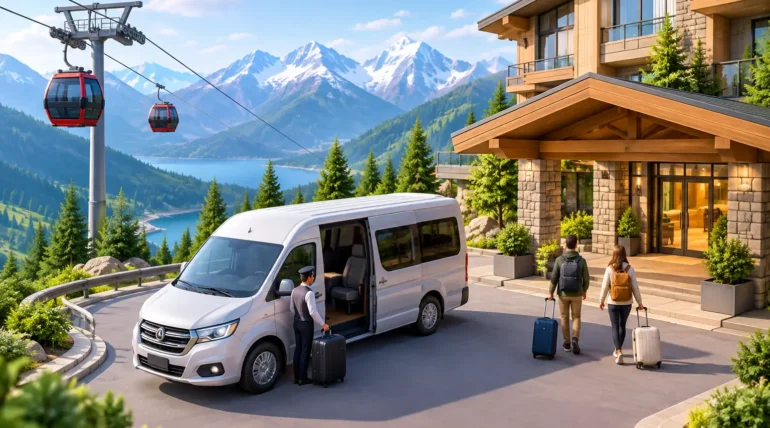
A resort transfer can set the tone for an entire stay. After a flight, a delayed bag, or a long day traveling with children, the last thing most guests want is to sort out a rental counter, load equipment, and face an unfamiliar mountain route. This resort hotel transport guide explains how to arrange the ride well before arrival, particularly when the destination involves winter weather, steep roads, or limited resort parking.
For travelers arriving at Salt Lake City International Airport and continuing to Park City, Deer Valley, Alta, Snowbird, Brighton, Solitude, or another Wasatch resort, private transportation is often less about extravagance than control. A confirmed vehicle, a professional chauffeur, and a clear arrival plan remove several variables from a trip that already has enough moving parts.
Begin With the Actual Travel Party
The right vehicle is determined by more than the number of seats. Count every passenger, checked bag, carry-on, ski bag, snowboard, stroller, car seat, and grocery stop you expect to make. A luxury SUV may be ideal for a couple or a small family with standard luggage, while a larger family or ski group may need a full-size SUV, Sprinter van, or coordinated multi-vehicle service.
Ski equipment is the detail most often underestimated. A vehicle that fits four adults comfortably may not fit four adults, four large suitcases, and four ski bags without compromising passenger space. Share equipment details during booking, including whether skis are in travel cases and whether snowboards or oversized luggage are coming along. A professional transportation provider can assign the appropriate vehicle before the driver arrives.
Child-seat needs deserve the same advance attention. Families should request the required seat type and provide each child’s age and approximate weight when reserving. This is a small planning step that prevents an airport-side delay and lets the chauffeur prepare the vehicle correctly.
Book a Resort Hotel Transfer Before You Fly
Airport transportation works best when the reservation includes precise details, not a vague arrival window. Provide the airline, flight number, arrival date, destination hotel or private residence, passenger count, luggage estimate, and a working mobile number. Flight information allows a transportation team to use real-time flight tracking rather than relying only on the original itinerary.
A good reservation also establishes where the pickup will occur. Airport terminals can be busy, especially on peak ski weekends and holiday travel days. Ask whether the chauffeur will meet guests inside, coordinate by text after baggage claim, or direct them to a designated commercial pickup area. The best plan is the one that is clear before the plane lands.
For return service, schedule the pickup around the flight’s recommended airport arrival time, not simply the drive time. Mountain weather, early-morning road conditions, resort check-out traffic, and airport security lines can all affect the margin needed. Your transportation provider should be able to advise on a sensible pickup time based on the route, season, and flight schedule.
Confirm the Price and the Cancellation Terms
A transparent advance quote matters most when demand is high. Storm days, major events, and holiday weekends can create unpredictable pricing with app-based rides, and vehicle availability may disappear just when guests need it most. Private service with fixed, upfront pricing gives travelers a known cost before departure and avoids surprise surge rates.
Review what the quote includes. Ask about airport fees, waiting time, extra stops, late-night service, child seats, and gratuity policy if any of those items are relevant. The goal is not to find the lowest advertised number. It is to know what transportation will cost, what service is being delivered, and how the company handles a flight delay or itinerary change.
Match the Vehicle to Mountain Conditions
For resort routes, vehicle capability and chauffeur experience should be considered together. All-wheel drive is a meaningful advantage on winter roads, but it does not replace professional judgment. A trained chauffeur understands how weather, chain requirements, road closures, canyon traffic, and changing visibility can affect the trip.
This is especially relevant for Alta, Snowbird, Brighton, and Solitude, where canyon travel may be affected by active snowfall or road restrictions. Park City and Deer Valley routes can also become congested during high-demand arrival periods. An experienced local operator monitors conditions, adjusts departure recommendations when necessary, and selects routes with the day’s operating reality in mind.
Luxury is practical in this setting. An immaculate, well-maintained vehicle with climate control, space for luggage, bottled water, and charging access gives guests time to settle in after a flight. More importantly, commercial maintenance standards, proper insurance, and a licensed operation provide accountability that casual rideshare arrangements may not offer.
Plan for the First and Last Mile at the Resort
“Door-to-door” should mean more than stopping at the property entrance. Resort hotels can have multiple arrival drives, valet areas, residences, clubhouses, and side entrances. Provide the complete property name, building name if applicable, and any instructions from the hotel or host. If the destination is a private home, include the full address and gate or access information in advance.
At many resorts, the chauffeur can assist with luggage at the arrival point, but guests should still keep essentials close at hand. Medications, wallets, travel documents, one change of clothes, and ski-day necessities belong in a carry-on rather than a suitcase that may be buried beneath other bags. If weather is active, have a warm layer available before leaving the airport rather than packed away.
Departure deserves equal care. Arrange the return pickup the day before travel and make sure the hotel knows where the vehicle should meet you. Guests leaving a large resort property should be ready a few minutes early, particularly when the vehicle must navigate valet circulation or heavy snow. A punctual departure starts with an easy-to-find pickup point.
When Private Service Is the Better Choice
Rental cars offer flexibility for travelers planning frequent excursions beyond the resort. They may make sense for an extended stay with a confident winter driver who wants to explore independently. The trade-offs are rental lines, parking charges, fuel, navigation, winter-driving responsibility, and the possibility of needing snow-rated equipment.
Shared shuttles can be a reasonable option for solo travelers with flexible schedules and light luggage. However, they commonly operate on fixed windows, make multiple stops, and provide less privacy. That can be a poor fit for families with tired children, executives headed to a meeting, guests carrying ski equipment, or groups arriving after a long flight.
Private black car or SUV service is generally the strongest choice when timing, privacy, comfort, and direct routing matter. It also makes sense for private-aviation arrivals, wedding parties, corporate groups, and guests whose itinerary begins the moment they land. MIB Limousine, for example, coordinates scheduled airport and resort transfers with advance confirmations, trained chauffeurs, all-wheel-drive luxury vehicles, and fixed pricing during peak travel periods.
A Short Resort Transport Checklist
Before finalizing transportation, confirm these practical details:
- Flight number and airline have been provided for real-time flight tracking.
- The vehicle has sufficient room for all passengers, luggage, and sports equipment.
- Child seats, accessibility requirements, and special requests are documented.
- Pickup instructions at the airport and hotel are clear.
- The quoted price, waiting-time policy, and cancellation terms are understood.
- A return transfer is scheduled with enough weather and airport-time allowance.
A well-planned transfer gives you a calmer arrival, but it also protects the days you came to enjoy. Choose transportation with the same care you would give the hotel itself, and let the route from runway to resort feel like part of the hospitality.