


A ski vacation can feel disorganized before the first run if the arrival is left to chance. After a flight into Salt Lake City, travelers may be managing checked ski bags, tired children, changing weather, and a mountain drive they have never made before. Thoughtful ski transfer planning turns that vulnerable part of the trip into a controlled, comfortable arrival at the hotel, lodge, or private residence.
For travelers headed to Park City, Deer Valley, Alta, Snowbird, Brighton, or Solitude, the transfer is not simply a ride from the airport. It is the first operational decision of the vacation. The right plan accounts for your flight schedule, party size, equipment, resort location, and the possibility that winter conditions will change the pace of the drive.
Start Ski Transfer Planning Before You Book the Flight
The best transfer plan begins with the full itinerary, not just an airport pickup time. Confirm the flight number, scheduled arrival, airline, terminal information, and final destination address. A hotel name is useful, but a precise address and any instructions for a private home or condominium help prevent unnecessary calls once the vehicle is already on the road.
Flight timing deserves a realistic view. Scheduled landing time is not the moment everyone is ready to leave. Passengers still need to deplane, walk through the terminal, collect checked luggage, locate oversized ski or snowboard bags, and settle any immediate travel needs. On a busy ski weekend, that process can take longer than expected. A professionally coordinated transfer should include real-time flight tracking, while still allowing for the practical time required after landing.
Return transportation needs the same attention. Consider airline check-in guidance, the distance from your resort, expected weekend traffic, and road conditions. An early morning departure from a mountain resort is far more relaxed when the pickup has been scheduled in advance with a clear meet time and destination terminal.
Match the Vehicle to People, Gear, and Comfort
A vehicle that appears adequate on paper can become cramped quickly when winter luggage is involved. Ski transfer planning should count every passenger, ski bag, snowboard bag, boot bag, suitcase, carry-on, and child seat. The answer is rarely based on passenger count alone.
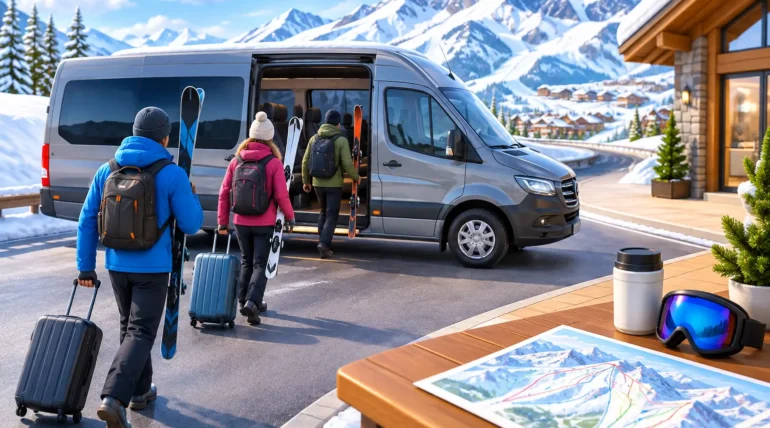
A luxury sedan may be an excellent fit for one or two travelers with compact luggage. A luxury SUV generally gives couples and small families more flexibility, particularly when equipment is included. For larger families, several couples, or groups traveling with substantial gear, a Sprinter van can provide the space needed to keep people and belongings organized instead of stacked around the cabin.
It also helps to distinguish between a trip that needs maximum luggage capacity and one that needs additional passenger seating. A party of six with six ski bags has different requirements than a party of six carrying only weekend bags. Share the equipment details when reserving. A transportation provider can assign the appropriate vehicle rather than making assumptions that create a crowded departure area at the airport.
For families, confirm child-seat needs early, including each child’s age and approximate weight. This is a safety detail, not an afterthought. It should be handled before arrival, along with requests such as extra luggage space or multiple pickup locations.
Choose Winter Readiness Over the Cheapest Option
The route from Salt Lake City International Airport to a ski resort can move from city traffic to canyon roads in a short time. Clear pavement at the airport does not guarantee the same conditions near the resort. Snowfall, wind, temperature changes, traffic incidents, and road restrictions can all affect the drive.
That is why the transfer provider matters as much as the vehicle category. Look for a licensed, commercially insured operator with chauffeurs experienced on local mountain routes and vehicles maintained for winter travel. All-wheel-drive capability can be a meaningful advantage, but it is only one part of sound winter service. Professional driving judgment, weather awareness, vehicle upkeep, and careful arrival coordination are equally important.
Private transportation also gives your party more control when conditions are challenging. You are not waiting through multiple hotel stops or sharing a vehicle with travelers on a different schedule. The chauffeur can focus on your flight, your luggage, and your destination, while you can settle in, recharge devices, and begin the trip together.
Build Flexibility Into the Arrival Plan
Winter travel does not always follow the original itinerary. Flights may arrive early, land late, divert, or be delayed at the gate. A transfer plan should state how these changes are monitored and how communication will work if the situation changes.
Before departure, save the transportation company’s contact information and make sure the reservation includes a mobile number that will be active after landing. International travelers should consider whether their phone plan supports calls and data in the United States. If not, arranging airport Wi-Fi access or an alternate contact in advance can prevent confusion.
The meeting process should also be clear. Some pickups are coordinated curbside, while others use a designated meeting location inside or near the terminal. Know what to expect, especially if someone in the group needs mobility assistance or if you are traveling with children and oversized baggage. Clear instructions reduce the temptation to rush through a busy airport with equipment in tow.
A good plan leaves room for the human side of travel, too. If the group needs a grocery stop, needs to pick up a rental key, or is arriving at a property with limited check-in hours, discuss that before booking. Not every itinerary needs extra stops, and each one adds time, but prearranging them is far better than negotiating details curbside after a long flight.
Compare Pricing Based on the Whole Trip
The lowest quoted fare is not always the lowest-stress choice. When comparing transfer options, ask whether the rate is fixed, what is included, and whether it changes during storms, holidays, or peak ski weekends. Upfront pricing makes it easier to plan the travel budget without worrying that demand-based rates will rise when weather turns difficult.
It is also worth confirming whether gratuity, airport fees, waiting time, child seats, stops, or late-night service affect the quote. Clear answers are a mark of disciplined service. Travelers should know the expected cost before they land, not discover additions after the transfer is complete.
For groups, private transportation can be particularly practical when the total is divided among travelers. Beyond the financial calculation, a single reserved vehicle means the party arrives together, equipment stays together, and no one has to navigate a new destination after dark or during a storm.
Give Your Chauffeur the Details That Matter
The most effective reservations are specific without being complicated. Provide the airline and flight number, number of passengers, equipment count, destination address, and a reliable phone number. Mention children requiring seats, mobility considerations, unusual luggage, or any planned stop.
If your destination is a private residence, include access details that may affect the final approach, such as a gated entrance, steep driveway, or property manager instructions. Mountain lodging can have narrow roads and active snow removal, so advance information helps the chauffeur make the arrival orderly and efficient.
MIB Limousine approaches these details as part of the service itself: real-time flight tracking, appropriate vehicle planning, and fixed advance pricing create confidence before the wheels leave the runway.
Let the Transfer Set the Tone for the Trip
A mountain vacation should begin with a warm vehicle, a capable chauffeur, and enough room for every person and piece of equipment. When ski transfer planning is handled early, the airport-to-resort drive becomes a quiet transition rather than another logistical problem to solve. That leaves your attention where it belongs: checking into the lodge, watching the snowfall, and being ready for the first chairlift.