


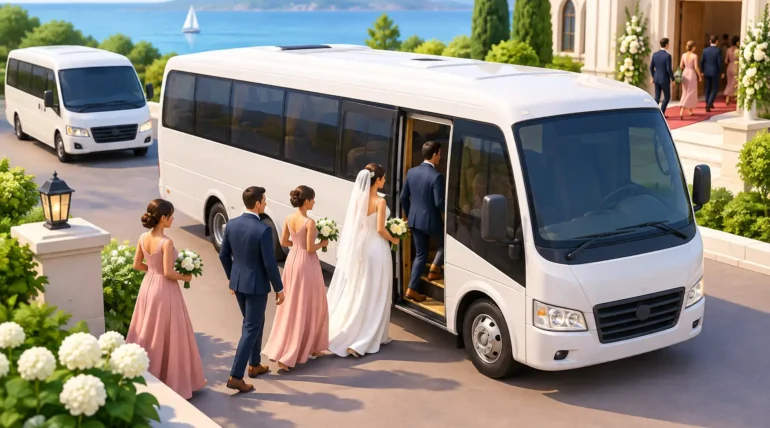
A wedding can run beautifully on paper and still become stressful at curbside. A photographer is waiting on the couple, a grandparent needs a comfortable ride, guests are navigating an unfamiliar venue, and the reception ends after the last shuttle was expected to leave. This wedding transport example shows how to build a plan that protects the schedule without making transportation feel like another production task.
The goal is not to put every guest in a luxury vehicle. It is to match the right vehicle, route, and pickup window to each moment that matters. For celebrations in Salt Lake City, Park City, or the mountain resorts, that also means planning for elevation, winding roads, seasonal weather, and the extra time formal attire and large groups require.
A Wedding Transport Example for a Full Celebration Day
Consider a wedding with a ceremony at a Park City venue at 4:30 p.m., followed by a reception at a nearby hotel. The couple is staying at one property, immediate family is split between two hotels, and 70 guests are traveling from Salt Lake City. A few guests flew into SLC Airport the day before, while others plan to enjoy the reception without driving afterward.
The transportation plan starts by separating people into groups with different needs. The couple needs privacy, room for attire, and a chauffeur who can arrive early and adjust around photography. Parents and grandparents need easy door-to-door access, patient assistance, and vehicles that are easy to enter. The wedding party needs dependable movement between hair and makeup, photo locations, and the venue. Guests need a clear pickup location, a visible vehicle, and a ride home that does not depend on a designated driver changing plans at midnight.
A practical vehicle mix could include a luxury SUV or sedan for the couple, two executive vans or Sprinter vans for the wedding party and family, and scheduled shuttle-style runs for guest transportation. The exact fleet depends on passenger counts, luggage, road conditions, and whether the route includes narrow mountain access roads. A vehicle that is ideal for airport guests with suitcases may not be the best choice for a short hotel-to-venue guest loop.
Sample transportation timeline
At 11:30 a.m., a private sedan or SUV collects the couple for a first-look location or takes one partner to the ceremony site. The chauffeur remains available by the hour, allowing for photo timing changes without requiring a new reservation.
At 1:30 p.m., the first Sprinter van begins transporting the wedding party. Building in a 15- to 20-minute buffer matters here. Wedding party pickups often take longer than expected because someone is gathering bouquets, garment bags, personal items, or a forgotten pair of shoes.
At 2:30 p.m., a second vehicle collects parents, grandparents, and any guests who need earlier arrival. This group should not be asked to wait through the wedding party’s photo schedule. Separate transportation gives them a calmer arrival and avoids crowding at the entrance.
At 3:30 p.m., guest shuttles begin their first run from the designated hotel pickup point. A departure time should be printed on the itinerary, but the plan should also state that the vehicle departs promptly. A chauffeur can assist with boarding, but no transportation schedule can absorb indefinite delays from late guests.
After the ceremony, the couple’s vehicle is positioned for a private departure to photo locations or the reception. Meanwhile, group vehicles move the wedding party and family on a separate schedule. This is where a well-run plan feels effortless to guests: nobody has to guess which vehicle they should enter or wait while the couple completes portraits.
At the end of the evening, return transportation operates in defined windows, such as 9:30 p.m., 10:30 p.m., and 11:30 p.m. Multiple departures are often better than one final run. Older relatives can leave comfortably, families with children have flexibility, and guests who want to stay for the final dance can do so without worrying about parking or mountain driving.
Build Around People, Not Just Passenger Counts
A common mistake is booking based only on total headcount. A 14-passenger vehicle may technically fit 14 people, but that does not mean it is the right answer for 14 guests in formalwear, or for a group carrying coats, gifts, and personal bags. Capacity should reflect comfort, access, and the realities of the route.
Start with the people whose transportation cannot fail: the couple, immediate family, wedding party, and guests who cannot or should not drive. Then decide whether all other guests need transportation or whether a hotel shuttle schedule will cover the main need. If the reception venue has limited parking, a broader guest transportation plan may be necessary. If the venue has ample parking and most guests are local, a focused plan for key groups may be more efficient.
Children and older guests deserve special attention. Confirm child-seat needs well before the event, including the children’s ages and approximate sizes. For grandparents or guests with limited mobility, ask about stairs, long walks from the drop-off point, and whether the venue has a protected entrance during rain or snow. These details are not minor. They shape the vehicle choice and arrival sequence.
Plan for Utah Roads and Seasonal Conditions
A mountain wedding has a different transportation profile than a downtown celebration. Park City, Deer Valley, Alta, Snowbird, Brighton, and Solitude routes can involve snow, reduced visibility, traffic around resort areas, and slower travel during peak weekends. Even in summer, construction, event traffic, and weekend arrivals can affect timing.
The answer is not simply to leave earlier. It is to use a provider with appropriate commercial insurance, trained chauffeurs, well-maintained vehicles, and all-wheel-drive capability where conditions call for it. A polished vehicle means little if it is not prepared for the route. For a winter wedding, build meaningful buffers around every mountain transfer, especially guest departures after dark.
Airport transportation deserves its own plan when family or VIP guests arrive from out of town. Rather than asking guests to navigate rental counters, parking, and a new mountain route after a flight, arrange private airport transfers with flight tracking and confirmed pickup instructions. This is particularly helpful for parents, elderly relatives, and guests arriving with formalwear or event supplies. It also provides a more composed first impression of the weekend.
Give Every Guest One Clear Instruction
Transportation fails most often through communication, not vehicle availability. Guests should receive one concise instruction that answers four questions: where to meet, what time to be there, what the vehicle looks like, and what to do if they miss it.
Avoid vague language such as “shuttles will run throughout the evening.” Instead, provide the exact hotel entrance, the first departure time, the final departure time, and a note that departures operate on schedule. If a venue has more than one entrance, identify the correct door. If guests need to cross a parking lot, mention it. If winter weather is likely, remind them to bring a warm layer for the walk between the hotel and vehicle.
The wedding planner, venue coordinator, and transportation dispatcher should also have the same final itinerary. Include every pickup address, the on-site contact, passenger counts, vehicle assignments, and contingency instructions. A last-minute change is manageable when everyone knows who has authority to make it.
Decide When Hourly Service Is Worth It
Point-to-point service works well for fixed transfers: hotel to ceremony, ceremony to reception, and reception to hotel. Hourly chauffeur service is often the better choice for the couple, VIP family members, or a wedding party with photography stops. It provides flexibility when portraits run late, a jacket needs to be retrieved, or the couple wants a quiet ten-minute pause before entering the reception.
There is a trade-off. Hourly service costs more than a simple transfer because the vehicle and chauffeur are reserved for the block of time. But it can reduce the risk of an important vehicle being unavailable precisely when the schedule shifts. For a tightly orchestrated day, that certainty is often worth more than trying to predict every movement in advance.
MIB Limousine can coordinate private black car, luxury SUV, limousine, and Sprinter van service around those distinct roles, with advance quotes and scheduled service designed for a precise event timeline. The strongest plans are confirmed early, then reviewed again as the guest list and venue details become final.
A well-planned wedding ride should never become the story guests tell afterward. It should simply mean the grandparents arrived relaxed, the couple arrived on time, and every guest had a safe, comfortable way to enjoy the celebration through the final farewell.