


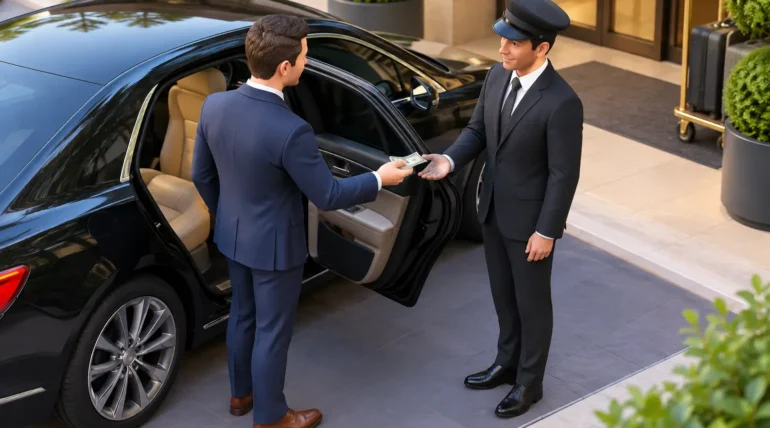
A private airport pickup after a long flight is not the moment most travelers want to calculate gratuity. Yet chauffeur tipping etiquette comes up often, especially when a ride includes flight monitoring, luggage assistance, winter driving, or a multi-stop itinerary. The good news is that the standard is straightforward: check whether a gratuity has already been included, then tip according to the quality and complexity of the service.
Unlike rideshare pricing, professional chauffeur service is arranged in advance and built around a defined itinerary. Your chauffeur may be tracking an arriving flight, coordinating a precise pickup location, preparing for mountain weather, and allowing time for baggage and equipment. A tip recognizes the personal attention behind that work, but it should never feel confusing or pressured.
Chauffeur Tipping Etiquette: The Standard Amount
For private black car, sedan, SUV, limousine, and Sprinter service, 15% to 20% of the total fare is the customary gratuity range in the United States. Fifteen percent is appropriate for reliable, professional service that meets expectations. Twenty percent is a strong choice when the chauffeur is notably attentive, manages a more demanding itinerary, or provides exceptional hospitality.
For many airport transfers, a flat amount can also make sense. A $20 to $40 tip is generally appropriate for a straightforward private airport ride, depending on the vehicle, fare, party size, and luggage load. For larger vehicles, such as a Sprinter van carrying a family, corporate group, or ski party, a higher amount is customary because the chauffeur is often managing more bags, more passengers, and more coordination.
The fare matters, but it is not the only consideration. A short trip in a luxury SUV may involve substantial assistance with luggage, car seats, ski equipment, or a difficult pickup environment. Conversely, a high-value point-to-point reservation with little luggage and no added requests may not require a tip beyond the standard percentage.
First, Confirm Whether Gratuity Is Included
Always review your confirmation, receipt, or advance quote before adding a tip. Some chauffeured transportation reservations include a service charge or driver gratuity automatically. Those terms vary by company and booking type, particularly for corporate accounts, weddings, hourly charters, and group transportation.
A service charge is not always the same thing as a chauffeur gratuity. It may support operational costs such as dispatch, insurance, vehicle preparation, or administrative coordination. If the reservation documents do not clearly state that gratuity is included, it is reasonable to ask before the trip. A professional transportation company should answer directly and clearly.
When gratuity is included, there is no obligation to add more. Still, many guests choose to offer an additional cash tip when a chauffeur goes beyond the expected scope of service. Examples include waiting patiently through a lengthy baggage delay, making an unplanned stop, helping organize a large amount of gear, or navigating especially challenging conditions with calm, attentive care.
When a Larger Tip Is Appropriate
Premium transportation is personal service, and the best gratuity decisions account for the real work involved. A chauffeur who simply completes a scheduled curb-to-curb transfer professionally deserves the standard amount. One who makes a complicated travel day feel controlled and comfortable may deserve more.
Consider increasing the tip when your reservation involves any of the following circumstances:
- Significant luggage, ski bags, snowboards, golf clubs, strollers, or other bulky equipment
- Multiple pickup or drop-off stops, especially with changing plans or timing
- Late-night, early-morning, holiday, or major-event service
- Challenging winter weather or mountain-road conditions
- Thoughtful assistance for children, older travelers, or guests with limited mobility
- Exceptional discretion, communication, vehicle presentation, or itinerary support
For travelers arriving at Salt Lake City International Airport and continuing to Park City, Deer Valley, Alta, Snowbird, Brighton, or Solitude, weather can be a meaningful factor. Mountain driving requires preparation, route knowledge, disciplined timing, and confidence in changing conditions. A larger tip is appropriate when a chauffeur handles a storm-day transfer with skill and composure, particularly when the trip requires careful loading, chain-control awareness, or adjustments around traffic restrictions.
That said, snow alone does not create an automatic obligation. You are tipping for the quality of the service, not merely the forecast. Professional winter readiness should be part of a properly operated mountain transportation service. The extra recognition is best reserved for a chauffeur whose preparation and hospitality noticeably improve your experience.
What to Tip for Common Private Transportation Trips
For a standard airport transfer in a sedan or SUV, 15% to 20% remains the easiest guideline. If you prefer a flat amount, $20 to $40 is a practical range for a typical party and luggage load. Add more when the service involves extensive baggage handling, a long wait due to a delayed flight, or unusual pickup logistics.
For a private SUV transfer to a mountain resort, the same percentage applies, although travelers often lean toward 20% when the chauffeur handles ski equipment, winter conditions, and a longer route. A family traveling with several suitcases, child seats, and skis may reasonably tip more than a solo business traveler carrying one bag, even if both rides are similarly priced.
For an hourly reservation, tip based on the total number of service hours and the level of itinerary management. Fifteen to 20% of the final total is customary. An hourly chauffeur may be waiting nearby, coordinating entrances and exits, making several stops, or responding to timing changes throughout the day. These reservations often involve more behind-the-scenes attentiveness than a single transfer.
For weddings, celebrations, and group transportation, confirm the gratuity policy during booking. Larger reservations may include an automatic gratuity, and there may be more than one chauffeur or vehicle involved. If gratuity is not included, a 20% tip is a suitable benchmark for well-executed service, particularly when the team keeps a large group moving on schedule.
Corporate travelers should also check their company travel policy. Some organizations require gratuity to be included on the final receipt, while others set a percentage limit. When a corporate account has arranged billing in advance, it is still appropriate to offer cash directly to the chauffeur if you would like to recognize exceptional service and the policy permits it.
Cash, Card, or Added to the Reservation?
Cash is always appreciated because it can be given directly to the chauffeur at the end of the ride. It is also useful when you would like to provide an additional amount beyond an included gratuity. However, cash is not required. Many travelers prefer to add gratuity by card when paying the final balance or when completing a reservation.
If you are unsure whether a card-added tip reaches the chauffeur promptly, ask the company before or after the trip. There is nothing awkward about confirming the process. Clear payment practices are part of a premium transportation experience.
When paying cash, handing the tip directly to the chauffeur with a brief thank-you is sufficient. There is no need for a formal presentation or a lengthy explanation. A simple, genuine acknowledgment of careful driving, help with luggage, or excellent timing is often as meaningful as the amount itself.
When It Is Reasonable to Tip Less
Tipping is customary, but it should reflect service. If the chauffeur is significantly late without clear communication, the vehicle is not presented as expected, or reasonable service requests are handled poorly, a reduced tip may be appropriate. Serious concerns should be shared with the transportation company promptly, ideally with the reservation details and a concise description of what occurred.
Be fair about issues outside the chauffeur’s control. Airline delays, airport congestion, road closures, and severe weather can affect timing even with careful planning. The more relevant question is how the chauffeur and dispatch team responded: Were you updated? Was the pickup adjusted correctly? Did the driver remain professional and focused? Reliable communication and calm problem-solving are central to quality service.
For a company such as MIB Limousine, advance coordination, real-time flight tracking, well-maintained vehicles, and properly equipped mountain transportation are practical standards, not extras that require an added tip by themselves. Gratuity is best used to recognize the person who delivers those standards with particular care.
A thoughtful tip should feel proportionate, not performative. Check your reservation for included gratuity, use 15% to 20% as your baseline, and adjust for the level of personal attention your trip required. When a chauffeur helps turn a complicated arrival, mountain transfer, or important occasion into a calm door-to-door experience, a sincere thank-you and appropriate gratuity are a fitting way to acknowledge it.