


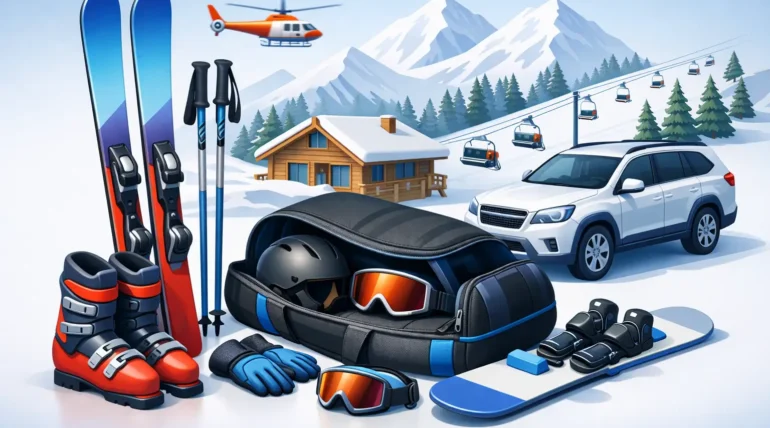
A Park City ski transfer ski equipment plan should begin before anyone boards a flight. A ski vacation can unravel quickly when a vehicle that looks spacious online has room for passengers but not for four ski bags, four boot bags, and a week of winter luggage. The right private transfer turns that arrival into a calm, door-to-door start to the trip – even when a storm is moving through the Wasatch.
For travelers arriving at Salt Lake City International Airport, equipment capacity is not a minor detail. It affects the vehicle selection, luggage arrangement, airport pickup process, and the comfort of every passenger during the drive to Park City, Deer Valley, or Canyons Village. A professional transfer provider should confirm these details in advance rather than asking passengers to make it work curbside.
Start With the Real Equipment Count
When reserving transportation, count more than the number of skiers. The useful number is the total number of large items traveling with the group: ski bags, snowboard bags, boot bags, checked suitcases, carry-ons, strollers, and any child seats required for the ride.
A family of four may technically fit in a luxury SUV, but the answer depends on how they pack. Four pairs of skis in one slim bag take up very different space than four individual padded ski bags. Snowboard bags can be wider and less flexible to load. Boots, helmets, and outerwear often travel in separate bags, especially when travelers want dry clothing accessible after landing.
Before booking, provide the transfer company with a clear inventory. Specify whether skis are bagged, whether any bags are oversized, and whether the group has snowboards. If you are bringing a ski box, a double ski bag, or a large hard-sided travel case, say so directly. These details allow the dispatcher to assign an appropriate vehicle instead of relying on assumptions.
Skis, Snowboards, and Luggage Need Different Space
Long equipment is only part of the equation. A vehicle needs sufficient cargo length for skis or boards and enough remaining capacity for luggage without crowding the passenger cabin. In mountain conditions, keeping cargo properly secured also matters. Loose bags should not shift during a climb, descent, or sudden stop on a snowy road.
For couples or small groups traveling light, a premium all-wheel-drive SUV may offer an excellent balance of comfort, winter capability, and equipment room. For larger families, groups with several snowboard bags, or travelers carrying substantial luggage, a luxury van or Sprinter is often the better choice. It provides more practical loading room while allowing passengers to settle in without holding bags on their laps.
Choose the Vehicle for the Trip, Not Just the Passenger Count
Passenger capacity and cargo capacity are not interchangeable. A seven-passenger SUV does not necessarily accommodate seven adults, seven full-size suitcases, and seven sets of ski equipment. Travelers should view maximum seating figures as a starting point, not a packing guarantee.
A private sedan is generally best reserved for one or two travelers with limited luggage and no bulky winter equipment. Luxury SUVs work well for smaller ski parties when the equipment count is confirmed in advance. Sprinter vans are especially useful when multiple travelers arrive with their own ski or snowboard bags, when a family needs child seats, or when a group wants meaningful personal space after a long flight.
There is a trade-off. A larger vehicle gives the group breathing room and more reliable equipment capacity, but it may not be necessary for a lightly packed couple. The most efficient choice is the smallest vehicle that safely and comfortably accommodates every passenger and item. The key is an honest equipment count before the reservation is finalized.
Ask About Winter-Ready Vehicle Standards
The road from Salt Lake City to Park City is usually straightforward, but winter weather can change road conditions quickly. Equipment capacity should be paired with a vehicle that is appropriate for mountain travel, not simply large enough to carry bags.
Ask whether the assigned vehicle is all-wheel drive and maintained for winter operation. A reputable provider should also have chauffeurs who understand local routes, airport pickup logistics, resort entrances, and the practical impact of snow, traffic restrictions, and peak arrival periods. Premium transportation is not only about leather seating and bottled water. For ski travelers, it is also about disciplined preparation for the road ahead.
Build Time Into Your Airport Arrival Plan
The drive from Salt Lake City International Airport to Park City commonly takes about 35 to 50 minutes in favorable conditions. During a major snowstorm, holiday weekend, or heavy afternoon traffic, travel time can increase. Ski equipment adds another operational consideration: loading a group’s gear carefully takes longer than placing two carry-ons in a trunk.
Allow time after landing for deplaning, restroom stops, checked-bag collection, and regrouping. Families traveling with children may need additional time to organize layers, boots, snacks, and electronics before heading outside. If skis are checked separately or arrive through an oversized-baggage area, that should be reflected in the pickup plan.
A scheduled private transfer with real-time flight tracking removes much of the uncertainty. The chauffeur can coordinate around the actual arrival rather than a static flight schedule, while the traveler has a clear meeting process and a vehicle reserved specifically for the group. This is particularly valuable late at night, when a delayed flight arrives during snowfall, or when travelers would rather not navigate an unfamiliar airport with long equipment bags.
Pack for the Transfer, Not Only the Slopes
A little organization makes the first hour of the trip substantially easier. Keep passports, wallets, phones, medication, and one warm layer in a carry-on rather than inside a large ski bag. Salt Lake City temperatures can be much milder than Park City, so it is wise to have a jacket accessible before leaving the terminal.
If the group intends to head directly to the resort, place essentials for the first evening in an easily identified bag. That may include chargers, toiletries, children’s items, and a change of clothes. Equipment can be loaded securely in the cargo area, while the items needed immediately remain within reach.
Travelers should also avoid packing wet or loose gear in a way that could affect the vehicle interior. Ski boots and clothing are best contained in durable bags. If equipment has been used before the return transfer, shake off excess snow and keep damp items together where possible. A professional chauffeur will assist with loading, but thoughtful packing protects both the group’s belongings and the immaculate condition expected in a luxury vehicle.
Confirm These Details Before Departure
The best time to address equipment is when making the reservation, then again shortly before travel if plans change. Confirm the number of passengers, total ski and snowboard bags, suitcase count, flight number, destination, and any child-seat needs. Provide the correct airline arrival information and a mobile number that will be available after landing.
It is also worth confirming whether the group is traveling to a hotel, private residence, condominium, or a resort area with multiple entrances. Park City and Deer Valley lodging can have specific access points, valet procedures, or narrow driveways. Clear destination details help the chauffeur deliver the group to the correct door without unnecessary calls or delays.
Pricing deserves the same clarity. Mountain transfers should be quoted in advance, with the traveler understanding what is included before the trip begins. Fixed pricing without surge-rate increases offers particular reassurance during storms, holiday periods, and busy ski weekends, when last-minute transportation can become unpredictable.
The Return Transfer Deserves the Same Planning
Departure day often creates more pressure than arrival day. Travelers may be checking out, returning rental gear, coordinating breakfast, and trying to make an early flight. Arrange the return pickup with the same attention to equipment and timing as the arrival transfer.
Your chauffeur should know the airline, departure time, pickup location, passenger count, and equipment load. For early-morning flights or winter weather, a conservative pickup time is usually the wiser choice. It is more pleasant to have time for airport check-in than to watch the clock from the back seat while snow falls outside.
MIB Limousine approaches ski transportation as a coordinated travel service, with winter-ready vehicles, professional chauffeurs, advance quotes, and room planned around the equipment guests actually bring. When the vehicle, flight coordination, and cargo requirements are handled before arrival, the first decision of the ski trip becomes the one that matters: which run to take first.